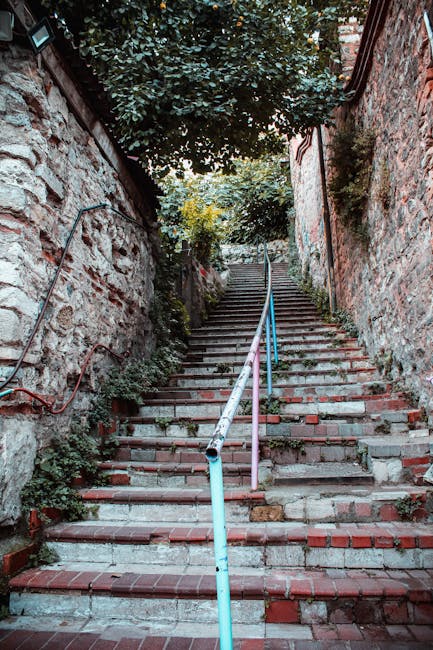
Narrow stairs and alley access problems for Hackney removals: a practical guide to planning, safety, and getting the move done
Moving in Hackney can be brilliantly local and painfully awkward at the same time. One minute you're dealing with a short hop across the borough, the next you're staring at a top-floor flat with a staircase that barely takes one person at a time, or an alley so tight the van has to stop well short of the door. That is the reality of narrow stairs and alley access problems for Hackney removals. It's common, it slows things down, and if you don't plan for it properly, it can turn an ordinary moving day into a long, tiring slog.
The good news? Tight access is usually manageable with the right preparation, the right equipment, and a removal plan that matches the building rather than fighting it. In this guide, we'll walk through what narrow access really means, why it matters, how removals are adapted around it, and what to check before moving day so you can avoid those last-minute headaches. If you're comparing service options as well, it can help to look at a dedicated flat removals approach or broader removal services that are comfortable with awkward access, stairs, and inner-London layouts.
Table of Contents
- Why narrow stairs and alley access matters
- How access challenges are handled
- Key benefits and practical advantages
- Who this is for and when it makes sense
- Step-by-step guidance
- Expert tips for better results
- Common mistakes to avoid
- Tools, resources and recommendations
- Law, compliance, standards, or best practice
- Options, methods, or comparison table
- Case study or real-world example
- Practical checklist
- Conclusion
- Frequently Asked Questions
Why Narrow stairs and alley access problems for Hackney removals Matters
Access is not just a minor inconvenience. It changes almost everything about a move: timing, labour, vehicle choice, packing method, and the level of risk involved. In Hackney, that matters even more because many homes and offices sit in converted buildings, older terraces, mansion blocks, mews-style streets, and side entrances reached through narrow passageways. Lovely to live in. Less lovely when you're carrying a wardrobe down a twisting stairwell on a wet Thursday morning.
The biggest issue is simple: if a sofa, mattress, fridge, or desk cannot move cleanly through the staircase or alley, the crew has to work around the restriction. That often means more lifting, slower progress, extra protection, and more chance of snagging walls, banisters, glass, or paintwork. Truth be told, it only takes one overconfident lift to cause a dent that ruins an otherwise smooth day.
There's also a practical cost angle. Access issues can increase labour time, require more people, or force a different vehicle and unloading method. A removal team that understands awkward access can explain these trade-offs clearly before the move starts, which is far better than discovering them when the van is already parked and the clock is running.
For many customers, the real stress is uncertainty. Will the sofa fit? Can the van get close enough? Will the crew need to carry everything from the street? Those questions are exactly why access planning deserves proper attention. It saves time, protects your belongings, and makes the day feel under control instead of improvised.
How Narrow stairs and alley access problems for Hackney removals Works
Handling narrow stairs and alley access is usually a mix of assessment, planning, and controlled movement. Good removals are rarely about brute force. They're about working out the safest route and matching the job to the building.
1. Access is checked before moving day
A proper move starts with a clear picture of the property. That means asking about stair width, stair turns, head height, parking distance, alley width, doorway clearance, and any tight corners inside the building. If possible, it helps to send photos or short videos. A five-second clip of the staircase can tell you more than a whole paragraph of description. The banister that looked "fine" suddenly looks like a problem once you see it from the landing.
2. The load plan is adjusted
Once the access is understood, the crew can decide what should be dismantled, wrapped, carried first, or taken by a different route. For example, a bed frame may come apart, a dining table may need the legs removed, and a wardrobe may have to be emptied and carried in sections. This is where sensible packing and boxes planning matters too, because smaller, well-packed loads are easier to handle on tight stairways.
3. The vehicle position is chosen carefully
Sometimes a van can park close enough for quick loading. Sometimes it can't, especially where alleys, bollards, residents-only parking, or narrow streets limit access. In those cases, the team may need a longer carry distance from the van to the property. That is normal, but it should be planned, not guessed at. If you know access is especially limited, a more flexible option like a man and van setup may suit smaller moves, while larger jobs may need a bigger vehicle such as a removal van or even a moving truck arranged with the street layout in mind.
4. Protective handling is added
Narrow stairs mean more contact points. Rails, corners, walls, and doorframes all become vulnerable. Crews typically use blankets, corner protectors, straps, and wraps to reduce the risk of damage. This is the unglamorous part of the job, but it's the bit that keeps everyone calmer. You can hear the difference when a careful team is at work: less banging, more measured steps, more "hold on a second" rather than "it'll be fine."
5. Safer lifting and pacing are used
On a tight staircase, speed is not the goal. Control is. Loads are moved in stages, with communication between team members at every turn and landing. The crew may stop to rotate an item, rebalance weight, or take a different angle. That slower pace is not inefficiency; it's usually what prevents damage and injuries.
Key Benefits and Practical Advantages
It may sound odd to talk about benefits when the issue is narrow stairs or a cramped alley, but there are real advantages to planning this well.
- Less risk of damage to walls, railings, furniture, and flooring.
- Fewer delays because the route has already been thought through.
- Better labour planning so the right number of movers is assigned from the outset.
- More realistic costs because the quote reflects the actual job, not a guess.
- Less personal stress on moving day, especially if you are juggling keys, children, pets, or a chain on completion day.
There is also a quieter benefit: confidence. When the removal team knows the staircase is awkward and the alley is narrow, they usually arrive with the right mindset. That changes the tone of the day completely. Instead of hoping things fit, everyone knows the plan.
For customers moving from upper-floor flats, this can be especially valuable. A well-organised move in a tight Hackney building often feels more professional than a larger but poorly planned move in a wide-open house. That's not fancy marketing talk, just the reality of the work.
Who This Is For and When It Makes Sense
This kind of planning matters for all sorts of people, but especially:
- tenants leaving or entering upper-floor flats with steep internal stairs
- homeowners in converted buildings with awkward stair turns or split levels
- landlords and letting agents arranging quick turnarounds between occupiers
- students moving into shared housing with rear alley access
- small businesses relocating from tight offices above shops or in converted premises
- anyone with large, heavy, or fragile items such as wardrobes, appliances, or a piano
If you're moving a one-bedroom flat, you may think narrow access is just part of the background noise. But it really becomes a major factor when you have bulky furniture, limited parking, or a deadline tied to key collection. Same-day moves are possible in some cases, although they need even tighter planning. In those situations, same-day removals are most successful when access is explained clearly from the start.
It also makes sense for anyone who has a family member or neighbour helping out. A tricky staircase is not the place for improvisation. If you know you'll be relying on extra hands, it's smarter to book support that understands the access issue rather than assuming friends can manage a sofa "if we just tilt it a bit". Famous last words, that one.
Step-by-Step Guidance
Step 1: Measure the access, not just the rooms
Most people measure furniture but forget the route. You need both. Check the narrowest stair width, the tightest turn, the landing space, door widths, and any outside passage or alley. If the route changes from front door to rear entrance, measure both. Small differences matter.
Step 2: Identify the awkward items early
Make a list of items that could cause problems: wardrobes, mattresses, desks, sofas, shelving, white goods, mirrors, and anything heavy or oddly shaped. A few items might need dismantling, and that should be decided before the day rather than during a sweaty midpoint pause on the stairs.
Step 3: Share photos or a video walkthrough
This is one of the easiest ways to reduce surprises. A few clear images of the staircase, alley, street entrance, and front door can help the mover judge whether extra labour, different equipment, or a different vehicle size is needed.
Step 4: Decide what will be packed separately
Loose items slow everything down. If smaller objects are packed into sturdy boxes, the team can carry them faster and more safely. If you need help with that side of things, packing and unpacking services can take a lot of pressure off the day. It's one less thing to worry about, and honestly, that counts for a lot.
Step 5: Confirm parking and carry distance
If the van cannot park close to the property, you need to know that in advance. A long carry through an alley or around the block changes the timing and may influence the quote. It's also worth checking whether there are restrictions on the road or any loading space that disappears at certain times of day.
Step 6: Protect the building before heavy items move
Floor coverings, bannisters, and corners should be protected where needed. On old staircases, paint and plaster can be delicate. Sometimes a property looks sturdy until the first box brushes the wall, and then suddenly everyone is walking on eggshells. Better to prevent that moment.
Step 7: Move the difficult items first or last, depending on the route
Some moves work better by handling the biggest item first while everyone is fresh. Others work better by clearing small items and making space before the bulky furniture comes through. The best order depends on the layout, not habit. A skilled crew will decide that on site.
Expert Tips for Better Results
Here are the little things that make a big difference in tight-access removals.
- Empty heavy furniture before moving it. A full wardrobe or filing cabinet is harder to balance on a staircase and far more tiring to carry.
- Remove loose parts in advance. Shelves, drawers, detachable legs, and handles should be bagged and labelled.
- Use consistent box sizes. Mixed, overfilled boxes are awkward on stairs. Standard sizes stack better and are easier to grip.
- Keep pathways clear. In alley access moves, even a small bin, bike, or planter can slow the whole process.
- Tell the movers about fragile finishes. Polished banisters, newly painted walls, and old plaster all need extra care.
- Expect the move to feel slower than usual. That's normal. Good access planning is about control, not speed.
One more practical point: if the move involves a shared stairwell, be considerate to neighbours. A quick hello, a bit of notice, and some patience go a long way. In Hackney, that can be the difference between a calm move and a grumpy one. Nobody needs a feud in the hallway on moving day.
If the access is truly limited and you need to store items briefly while the new place is prepared, short-term storage can be a sensible bridge. It gives you breathing space, which is underrated during a move.
Common Mistakes to Avoid
Let's face it, most access problems are avoidable if they are caught early. The trouble is that people often underestimate them.
- Assuming "it'll probably fit". Probably is not a plan.
- Only checking the front door. The staircase or alley is often the real issue.
- Booking a vehicle that is too large for the street. A bigger van is not always a better van.
- Not mentioning the narrow rear access. The crew can't solve a problem they haven't been told about.
- Leaving packing until the morning of the move. That leads to rushed lifting and cluttered hallways.
- Forgetting about parking and waiting time. Access is about the route to the property as much as the property itself.
Another subtle mistake is not reviewing your own furniture realistically. A sideboard that looks manageable in a living room can be awkward on a spiral or dogleg staircase. Measure it, yes. But also think about how it turns, what the grab points are, and whether it can be taken apart. That extra five minutes of thought saves a lot of huffing later.
Tools, Resources and Recommendations
You do not need a van full of fancy gear to make a tight-access move work. But the right tools help.
| Tool or resource | What it helps with | Why it matters |
|---|---|---|
| Measuring tape | Stair widths, furniture sizes, door openings | Stops avoidable fitting problems |
| Phone camera or video | Visual access checks | Helps the team spot turns, slopes, and obstacles |
| Furniture blankets | Surface protection | Reduces scratches and knocks on narrow routes |
| Straps and lifting aids | Controlled carrying | Improves balance and safety on stairs |
| Labels and marker pens | Box organisation | Speeds up unloading and unpacking |
From a service perspective, it's worth looking at removal van or man with van options for smaller or more flexible moves, and at house removals if the job is larger and needs a more structured approach. For furniture-only jobs, furniture removals or even furniture pick-up may be more efficient if you are moving just a few bulky pieces.
And if the move is work-related, especially from a converted office or upper-floor workspace, it is worth considering office removals or commercial moves so the provider can plan around both access and business continuity.
Law, Compliance, Standards, or Best Practice
Narrow access removals do not usually involve complicated legal issues on their own, but there are still important standards and best practices to keep in mind.
First, anyone carrying items should do so safely and without putting themselves, you, or the property at unnecessary risk. That means sensible load limits, controlled movement, and proper handling on stairs. If a route is clearly unsafe, it should be paused and reassessed rather than pushed through for the sake of speed.
Second, moving work in shared buildings often needs common courtesy and practical awareness of neighbours, landlords, or managing agents. In blocks with shared hallways or staircases, good access planning includes not blocking exits, not damaging communal areas, and keeping the move as tidy as possible.
Third, if a service provider has its own health and safety policy or insurance and safety information, that is worth reviewing. It's not paperwork for the sake of it; it tells you how seriously they take risk, liability, and safe handling.
Lastly, for your own peace of mind, read the practical terms of the booking before move day. Payment, timings, responsibilities, and complaint handling are all easier to understand in advance. If you want to see how a provider sets out those basics, pages like pricing and quotes and terms and conditions are the sort of place where those details should be clear.
Options, Methods, or Comparison Table
Different access problems call for different approaches. Here's a simple comparison that may help you choose the right setup.
| Move type | Best for | Pros | Trade-offs |
|---|---|---|---|
| Man and van | Smaller loads, flexible access, quick jobs | Agile, easier to position, often practical in tight streets | Limited capacity for larger homes |
| Removal van | Medium moves with awkward stair or alley access | Good balance of space and manoeuvrability | May still need multiple trips if the load is large |
| Moving truck | Larger homes or business moves | Higher carrying capacity, fewer trips | Less convenient on very narrow streets |
| Furniture removals | Bulky items only | Efficient for sofas, wardrobes, and white goods | Not ideal for full household moves |
| Storage first | Uncertain access or timing gaps | Reduces pressure and keeps items secure short term | Requires an extra stage in the move |
To be fair, the "best" option is often the one that matches the building, not the one that sounds biggest on paper. A compact vehicle can beat a huge truck when the alley is narrow and the stairs are tight.
Case Study or Real-World Example
Imagine a typical Hackney flat move on a weekday morning. The property is on the second floor of a converted terrace. The staircase is steep, the landing is narrow, and the rear access goes through a slim shared alley that barely leaves room for a wheelie bin, let alone easy loading. The client has a sofa, a double bed, two wardrobes, several boxes, and a mirror that absolutely should not be bumped. Naturally, the sofa is the thing that looks innocent until you meet it on the stairs.
Here's how a sensible move would be handled. First, the access is checked with photos. Next, the wardrobes are emptied and partially dismantled. Boxes are packed before the crew arrives. The van is positioned as close as possible, but because the alley is tight, the team expects a longer carry route. The sofa is moved at an angle, with blankets on the corners and one person guiding from below while another steadies the top. The mirror is wrapped and taken separately. There are pauses at the landing, because the turn is awkward and a rushed pivot would be asking for trouble.
The move is not fast in the dramatic sense. No one is sprinting. But it is smooth, controlled, and finished without damage. That is the real win. The client gets out on time, the walls survive, and the stairwell is left clean. Not glamorous, but brilliant all the same.
Practical Checklist
Use this checklist before the move, especially if you already know the stairs or alley are tight.
- Measure the narrowest stairs, landings, doors, and alley access points
- Take photos or a short video of the route
- List all bulky or fragile items
- Disassemble furniture where sensible
- Pack boxes before moving day
- Confirm where the van can park
- Check whether the carry from van to door is long
- Protect communal areas and floor surfaces
- Tell the mover about any awkward turns or low ceilings
- Review timing, payment, and safety expectations in advance
If you're still deciding on the right type of support, a straightforward move from a top-floor flat may suit man with a van, while a fuller household move may be better handled through home moves or house removalists. Students, meanwhile, often benefit from the speed and flexibility of student removals when luggage, boxes, and awkward staircases all collide in one move.
Conclusion
Narrow stairs and alley access problems are part of Hackney life, but they do not have to make your move miserable. With the right measurements, a realistic plan, and a removal team that understands the local building types, you can turn a tricky route into a manageable job. The key is to stop guessing and start planning. Once you do that, everything gets easier: the timing, the safety, the quote, and even your own stress level.
In our experience, the best moving days are rarely the ones with the widest hallways. They're the ones where everyone knows the route, the risks are handled early, and the job is approached with patience. A bit of preparation goes a very long way. One careful lift at a time, that's usually how these things work.
Get a free quote today and see how much you can save.
And if you want a little extra reassurance before the big day, it can help to review the company background on about us and the practical details in the complaints procedure or accessibility statement. Clear information tends to make a move feel a lot less daunting. Funny how that works.
Frequently Asked Questions
How do movers handle very narrow stairs in Hackney flats?
They usually assess the staircase first, then decide whether furniture should be dismantled, carried in a different order, or moved with extra protection. The slower, more controlled approach is usually the safest.
What should I measure before booking a removals team?
Measure the stairs, landings, door widths, alley access, and the largest furniture items. It's also useful to note any sharp turns, low ceilings, or shared passages that limit carrying space.
Can a sofa or wardrobe be moved through a tight alley?
Sometimes yes, but it depends on the width, turning space, and whether the item can be partially dismantled. If the alley is especially tight, the team may need a different loading method or vehicle setup.
Do narrow stairs make removals more expensive?
They can, because awkward access may take more time and labour. The exact cost depends on the property layout, the amount of furniture, and how far the team has to carry items from the vehicle.
Is it better to choose a van or a truck for tight access?
For narrow stairs and alley access, a van is often easier to position than a large truck. Bigger is not always better. The best choice depends on the load size and how close the vehicle can get to the property.
Should I dismantle furniture before the movers arrive?
If you can do it safely, yes. Beds, wardrobes, tables, and shelving often move much better in pieces. That said, if you are unsure, let the removals team handle it so nothing gets damaged.
What if the van cannot park near my front door?
Then the move may involve a longer carry from the street or a nearby loading point. This is common in Hackney, especially on narrower roads or where alleys and parking restrictions limit access.
Are same-day removals suitable for awkward access properties?
They can be, but only if the access issues are explained clearly in advance. Tight stairs and alleyways add complexity, so same-day jobs work best when the load is manageable and the route is known.
How can I protect my walls and bannisters during a move?
Use blankets, padding, and careful handling around corners and landings. Good movers will treat the property as carefully as the furniture, especially in older buildings where finishes can be fragile.
What should I tell the removals company before move day?
Tell them about the staircase width, alley access, parking, any bulky items, anything fragile, and whether furniture needs dismantling. The more accurate the information, the smoother the day usually goes.
Can storage help if access is too difficult on moving day?
Yes. If timing or access is creating too much pressure, short-term storage can make the move easier by splitting it into stages. That can be especially useful when keys, repairs, or handovers do not line up neatly.
What's the biggest mistake people make with narrow access removals?
Probably assuming everything will just fit once the team arrives. Access problems are best dealt with early, not improvised halfway through a staircase turn with everyone holding their breath.